New HIV infections have risen 25% since 2010 in Latin America, while the world has cut them by 42%. With the same knowledge and the same tools, the difference lies in the decisions that are not being made, and in an epidemic that was declared “over” when we are still very far from that.
After four decades of response to HIV, the epidemic is still alive in Latin America, and not for lack of tools, but because decisions are not being made. According to UNAIDS’ latest regional report, Latin America and the Caribbean recorded 153,000 new infections and 32,800 AIDS-related deaths in 2025. Since 2010, infections have risen 25% in Latin America, while the Caribbean has cut them by 30% and deaths by 65%. Worldwide, the decline is 42%, even though last year 1.2 million people acquired the virus and 570,000 died.
Four decades ago, none of what we now take for granted existed: treatment that makes the virus undetectable and untransmittable, rapid tests, prevention methods that can be combined. We have learned a great deal. And yet, it seems not enough: what we know is not turning into decisions, and that gap is what keeps the epidemic alive.
The decisions that are missing
The epidemic did not end: some chose to stop looking at it. Declaring it over makes people living with HIV in the region invisible, and that averted gaze translates into concrete decisions that are not made.
The first is reaching young people before they need it. Thousands of adolescents and young people begin their sexual lives without timely information and without prevention tools within reach, tools they could combine according to their lifestyle, practices and context. UNAIDS data show it: among young people in the region, new infections fell 12% among women and rose 16% among men, and men account for three out of four new infections. In Guatemala, 8 out of 10 tests are done on women, while 8 out of 10 new cases are men. Peru has seen new infections grow 36% since 2010, even though it treats 80 out of every 100 people.
The second is bringing testing closer. In Mexico, 128,000 people living with HIV do not know it. In Argentina, 49 out of every 100 people are diagnosed late, and there is not even public data on how many achieve a suppressed viral load.
The third is making a diagnosis become treatment, and making that treatment last. In Chile, 23 out of every 100 people know they are living with HIV and are not on treatment; in Panama it is 33 out of every 100, and in Jamaica, 41 out of every 100. Brazil, with one of the strongest responses, still has to reach more than 190,000 people who are diagnosed but not on treatment. In Colombia, the share of people without a suppressed viral load rose from 35 out of every 100 in 2022 to 38 in 2025. In Haiti, where getting around is hard, 1,843 people stopped attending AHF centers between January and September 2026. And the Dominican Republic closed 2025 with more than three new infections for every death.
Treatment exists. Getting to it is not automatic
One might think that, since treatment exists, the response takes care of itself. It does not. Behind each of these figures are social, economic and political conditions: the stigma that keeps people away from a clinic, the red tape that interrupts treatment, distance, the lack of money for transport, and health systems that too often fail precisely where they should make things easier: in access to treatment and in support to sustain it. On top of that, funding is shrinking: international support for HIV fell 18% in 2025, to US$7.3 billion, the lowest level in almost two decades, and several countries in the region are in transition and will stop receiving external support. The region has also not had the same access to new prevention tools, as several of its countries were left out of the voluntary licensing agreements that would expand them.
It is not about discovering anything new. It is about deciding: taking information and prevention to young people before they need them, bringing testing closer to those it does not reach today, making a diagnosis become treatment with no steps in between, supporting those who get lost along the way, and measuring and publishing results every year, because what is not counted cannot be improved.
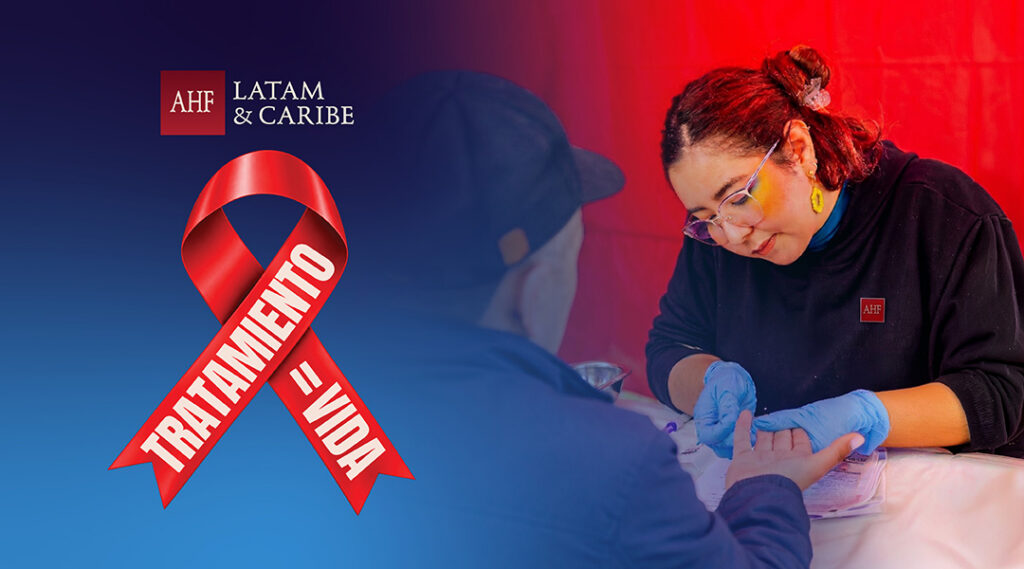
40 years later, the same gaps are still costing lives. Knowledge is not what is missing: decisions are. It is time to act. Treatment = Life.
Sources: UNAIDS, Latin America and the Caribbean regional report (July 2026) and 2026 global fact sheet (2025 data); Mexico’s Ministry of Health (June 30, 2026); Argentina’s Ministry of Health, Bulletins No. 40 and No. 42; Guatemala’s MSPAS (preliminary 2026 data); Chile’s Minsal (July 2026); Panama’s MINSA (2025); AHF analysis of UNAIDS 2024 data (Jamaica); Brazil’s Ministry of Health, “Cascata do cuidado” (September 30, 2026); Colombia’s High-Cost Account (2026); AHF Haiti, HMIS (figures from 12 centers, not national); Peru’s MINSA (June 2026); UNAIDS AIDSinfo (Dominican Republic, 2025 data).